Three-part series: the clothing industry in the Netherlands, women, and resistance
Because clothing is so self-evident—you wear it every day, and nowadays it is almost everywhere, easily available—we sometimes forget how impressive the history of textiles truly is. The textile industry has had an unparalleled impact on the global economy, societies, and families. Yet many (young) Dutch people today seem to have forgotten how enormously important the textile industry once was in the Netherlands. Even fewer of us appear to know about the role women played in it, and about how textiles and clothing have not only a practical function in our lives, but also a profound political one. Our wardrobes are bursting at the seams, but what do we actually know about the mysterious and epic garments we keep inside them?
In this three-part series, I explore what the clothing industry in the Netherlands looked like in the past, the role women played within it, and the part justice and resistance played. By drawing lessons from the past, we gain insight into the possibilities of the future.
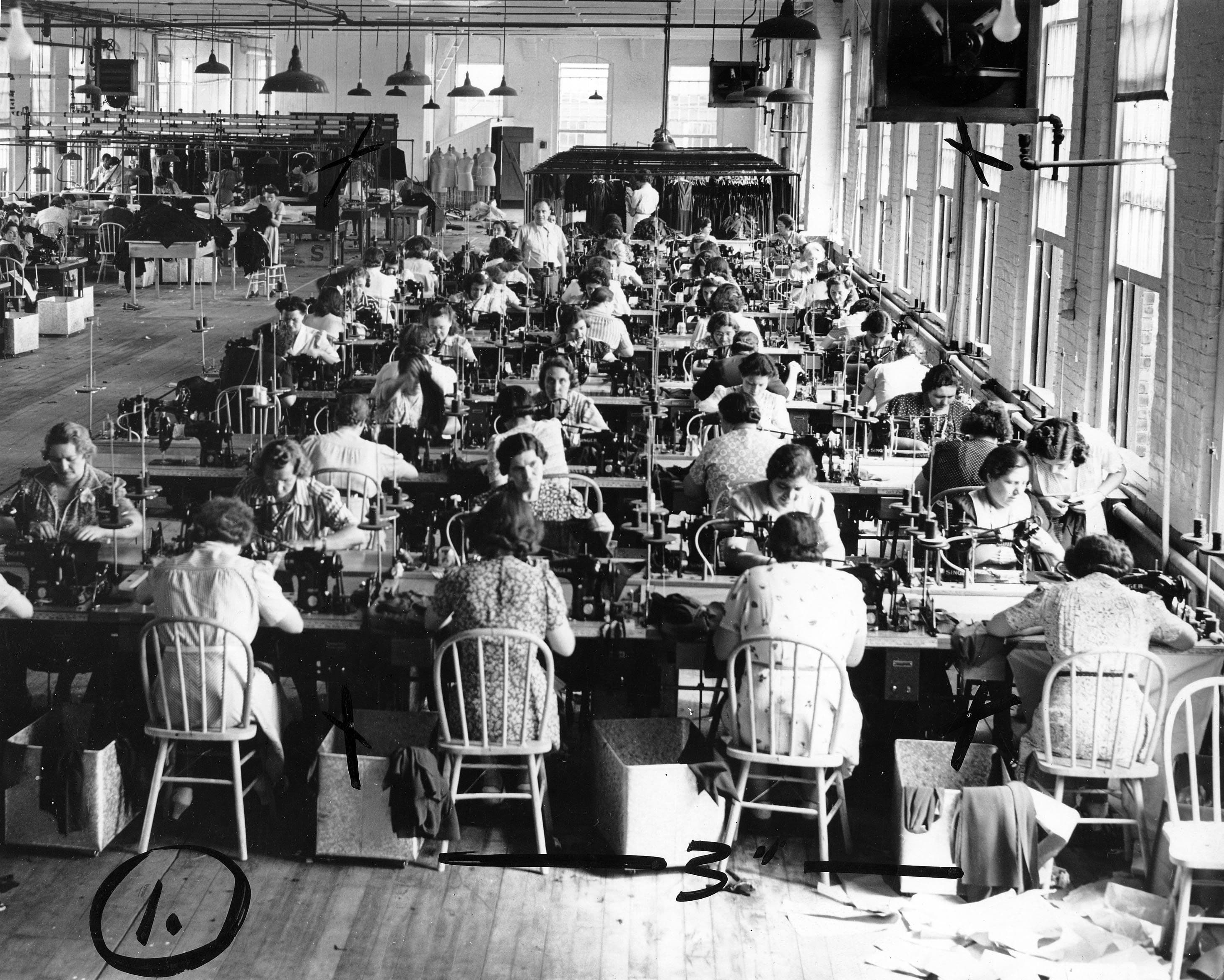
“Why this focus on women?” you might wonder. Well, the modern, globalized clothing industry as we know it today is built on women’s labor. Today, 80 percent of garment workers are women—but this was also true in the past. The Industrial Revolution owes much of its existence to textiles, and especially to cotton (see_ Empire of Cotton: A New History of Global Capitalism_). Although we like to associate the Industrial Revolution with coal, steel, and strong men, it was women and their work in the textile sector who stood at the cradle of our modern global economy. Make no mistake, however: this work was anything but easy or light.
Today, work in the clothing industry is primarily carried out by women from the Global South. As a Dutch woman, I find it important, for several reasons, to stand in solidarity with these women, even though they live on the other side of the world. I wear the clothes they have made every day; through my purchases, I (however harsh that may sound) partly determine their economic stability and that of their families; and by using my voice, I have the opportunity to stand up for their rights. At the same time, through my work—as a PhD researcher on labor in the clothing industry—I have the privilege of engaging deeply with the perspectives of the women who dress the world anew every single day.
At the same time, solidarity with women who make clothing also makes sense from a historical perspective. After all, it was my own (great-, great-great-)grandmothers who themselves once worked with textiles, just like many other women in the Netherlands who came before you and me. Many Dutch people seem to think that textile and garment labor is a far-removed phenomenon—something that happens in the “Far East” and has little to do with our small country—but nothing could be further from the truth. Unfortunately, professions in which women are overrepresented are often dismissed as less important (and therefore paid less), and in the most extreme cases are even pushed into the realm of unpaid labor. I immediately think of my grandmother’s generation, in which women en masse attended domestic science schools to learn needlework, only to go on to provide entire communities with knitted sweaters, darned socks, and custom-made clothing. But women were also heavily overrepresented in factories in the Netherlands. And in modern factories, too, it is mainly women who, for low wages and under poor conditions, provide us with our clothes.
Although garment work is sometimes portrayed as docile and feminine—in many cultures, women are set to handwork to keep them indoors; in Christianity, handwork is intended to curb women’s promiscuity, and in Islam it is linked to ideals of modesty—clothing labor is anything but that. It is hard work and requires a high level of skill. Beyond the work itself, however, textiles have also been a powerful vehicle of resistance. In the Netherlands, the history of textiles is inextricably linked to forms of resistance, ranging from large-scale industrial strikes to subtle symbolism during the occupation. An iconic example is the Twente textile strike of 1923–1924, one of the longest and fiercest labor conflicts in Dutch history, in which workers collectively resisted wage cuts and deteriorating working conditions.
During the Second World War, resistance through textiles took on a more symbolic meaning; think of wearing certain colors (such as orange, which was forbidden by the occupier) as a silent form of protest. Scarcity also forced creative resistance: reusing old fabrics and refusing to hand in textiles for the German war industry became acts of civil disobedience. In addition, there are many stories of deportations in which people were forced to work in textile factories for the Germans. In this way, an everyday product was transformed into a powerful instrument of both socio-economic struggle and national identity.
The upcoming articles will zoom in on these stories and together offer a clear and accessible insight into the history of the clothing industry in the Netherlands.
Vanwege de vanzelfsprekendheid van kleding - je draagt het immers elke dag en het is tegenwoordig vrijwel overal, makkelijk verkrijgbaar - vergeten we soms hoe indrukwekkend de geschiedenis van textiel is. De textielindustrie heeft een ongekende impact gehad op de wereldwijde economie, maatschappijen en gezinnen. Maar veel (jonge) Nederlanders lijken tegenwoordig te zijn vergeten hoe enorm belangrijk de textielindustrie in Nederland is geweest. Nog minder lijken we te weten over de rol die vrouwen hierin hebben gespeeld, en hoe textiel en kleding niet alleen een praktische rol hebben in ons leven, maar ook een enorme politieke rol. Onze kledingkasten puilen ervan uit, maar wat weten we nou eigenlijk van de mysterieuze en epische kledingstukken die we erin bewaren?
In deze driedelige serie zoek ik uit hoe de kledingindustrie in Nederland er vroeger uitzag, welke rol vrouwen daarin speelden en welke rol rechtvaardigheid en verzet speelden. Met deze lessen uit het verleden krijgen we een inkijkje in de mogelijkheden van de toekomst.
“Waarom die focus op vrouwen?”, denk je misschien. Nou, de moderne, geglobaliseerde kledingindustrie zoals we die vandaag de dag kennen is gebouwd op de arbeid van vrouwen. Tegenwoordig is 80% van kledingarbeiders vrouw - maar vroeger was dit ook zo. De industriële revolutie ontleent haar bestaansrecht in grote mate aan textiel, en dan met name katoen (zie hiervoor: Empire of Cotton: A new history of global capitalism). Hoewel we de industriële revolutie graag associëren met kool, staal en sterke mannen, waren het vrouwen en hun werk in de textielsector die aan de bakermat staan van onze moderne wereldeconomie. Maar vergis je niet: het werk was allesbehalve makkelijk en licht.
Tegenwoordig wordt het werk in de kledingindustrie vooral gedaan door vrouwen uit het Globale Zuiden. Als Nederlandse vrouw vind ik het om verschillende redenen belangrijk solidair te zijn met deze vrouwen, zelfs al leven ze aan de andere kant van de wereld. Ik draag elke dag de kleding die zij hebben gemaakt, ik bepaal (hoe cru ook) mede via mijn aankopen over hun economische stabiliteit en die van hun gezin, en door mijn stem te gebruiken heb ik de mogelijkheid op te komen voor hun rechten. Tegelijk heb ik vanwege mijn werk – als PhD onderzoeker naar arbeid in de kledingindustrie – het privilege om me te verdiepen in de perspectieven van de vrouwen die de wereld elke dag opnieuw aankleden.
Tegelijk is solidariteit met de vrouwen die kleding maken ook logisch vanuit een historisch perspectief. Het waren immers mijn (over, overgroot)oma’s die nota bene zelf óók ooit met textiel bezig waren, net zoals veel andere vrouwen in Nederland die jou en mij voorgingen. Veel Nederlanders lijken te denken dat textiel en kledingarbeid een ver-van-hun-bed show is; iets wat in het ‘verre Oosten’ gebeurt en verder weinig met ons kikkerlandje te maken heeft, maar niks is minder waar.
Helaas worden beroepen waar vooral vrouwen werkzaam in zijn vaak weggezet als minder belangrijk (en daarom minder betaald) en in de meest extreme gevallen zelfs verdrukt tot onbetaald werk. Ik denk dan al snel aan de generatie van mijn oma, waar vrouwen massaal op de huishoudschool leerden handwerken, om vervolgens hele gemeenschappen te voorzien van gebreide truien, gestopte sokken en op maat gemaakte kleding. Maar ook in de fabrieken in Nederland waren vrouwen ruim oververtegenwoordigd. En ook in moderne fabrieken zijn het vooral vrouwen die, voor een laag loon en onder slechte omstandigheden, ons voorzien van kleding.
Hoewel kledingarbeid soms kan worden afgeschilderd als zeer dociel en feminien (in veel culturen worden vrouwen aan de handarbeid gezet om hen binnenshuis te houden. In het christendom is handarbeid bedoeld om de promiscuïteit van vrouwen tegen te gaan en in de islam is het gekoppeld aan een hang naar bescheidenheid). Maar kledingarbeid is alles behalve dat. Het is hard werken en vraagt een hoge vaardigheid. Maar los van het werk zelf, is textiel ook een enorme factor geweest van verzet.
In Nederland is de geschiedenis van textiel onlosmakelijk verbonden met vormen van verzet, variërend van grootschalige industriële stakingen tot subtiel symbolisme tijdens de bezetting. Een iconisch voorbeeld is de Twentse textielstaking van 1923-1924, een van de langste en felste arbeidsconflicten in de Nederlandse geschiedenis, waarbij arbeiders zich massaal verzetten tegen loonsverlagingen en verslechterende arbeidsvoorwaarden.
Tijdens de Tweede Wereldoorlog kreeg het verzet via textiel een meer symbolische lading; denk aan het dragen van bepaalde kleuren (zoals een oranje, wat verboden was door de bezetter) als stil protest. Ook de schaarste dwong tot creatief verzet: het hergebruiken van oude stoffen en het weigeren om textiel in te leveren voor de Duitse oorlogsindustrie werd een daad van burgerlijke ongehoorzaamheid. Daarnaast zijn er veel verhalen over deportaties, waar mensen gedwongen werden in textielfabrieken te werken voor de Duitsers. Zo transformeerde een alledaags product tot een krachtig middel voor zowel sociaal-economische strijd als nationale identiteit.
De komende artikelen zoomen in op deze verhalen, en vormen samen een overzichtelijk inzicht in de geschiedenis van de kledingindustrie in Nederland.