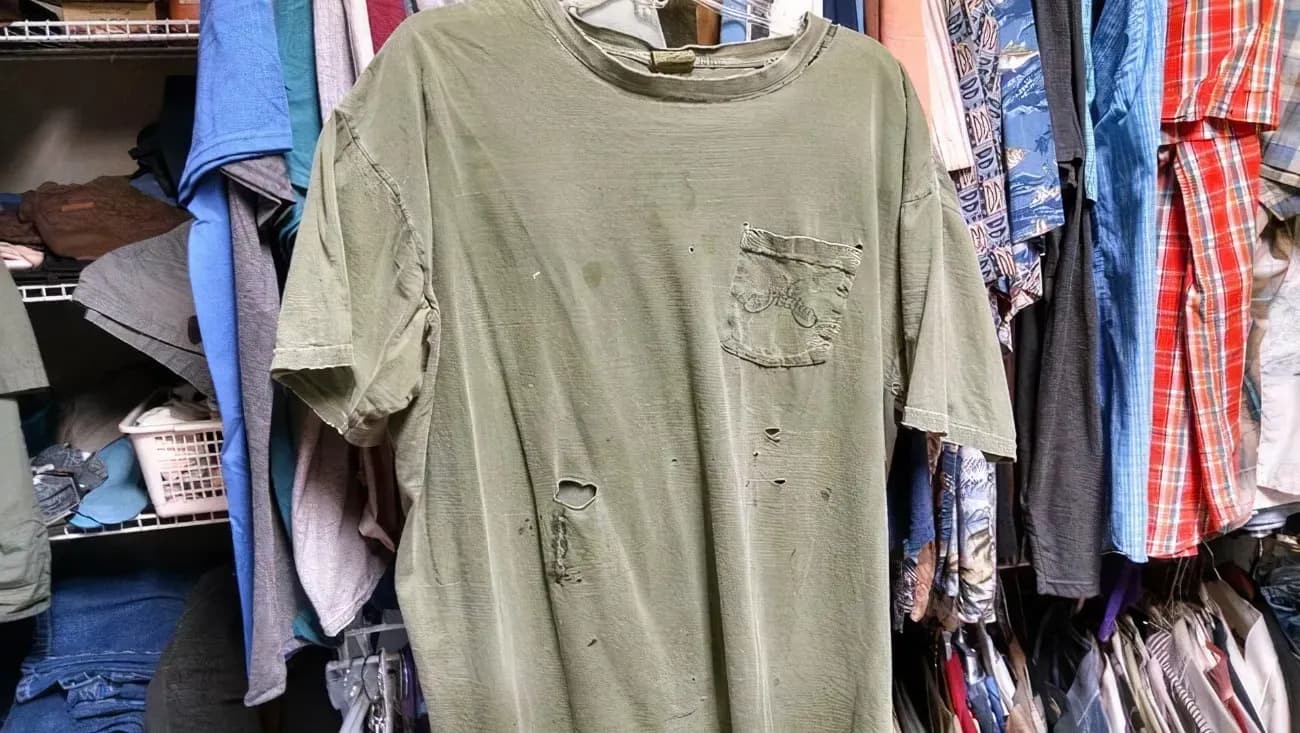
“It’s not you, it’s me” said your T-shirt
Post-consumer textile waste is slowly but surely damaging our planet at all levels. Evidence is everywhere: a quick research on the internet will show the Atacama Desert in Chile or beach shores in Ghana buried under mountains of discarded clothes.
We as SFM always advise “buy less and if you buy choose well, choose consciously, choose quality”. Let’s focus on the latter. Ever wonder why the clothing waste rate has never been this high?
Putting consumer behaviour on a bench for a moment, one would throw away their clothes when they are not wearable anymore. As all things, also clothes get damaged, break and wear out! But this seems to happen far too early in their lifetime, especially in the case of fast fashion.
My vintage jeans have lived more decades that I have and they are still good and rigid. The recently manufactured jeans I got from a swap event probably won’t last as much. To get down to brass tacks, the quality of my vintage jeans is better than the newest ones. After all, the once was better discourse is actually true when it comes to clothes.
❓ Why is that? When was quality put in the equation of clothing making? Why won’t my newest jeans last as much as my vintage ones? Why are price accessible garments so low in quality these days?
It’s not you, nor me, nor the washing machine: it’s your item per se.
Quality in clothing has definitely decreased throughout the last 25 years mainly due to the rising of fast fashion. Same old story, the bad guy is fast fashion. But this time, it has some fellow companions.
As we probably all know by now, fast fashion is the system of producing garments where multiple micro collections are made in two weeks (or even less) time instead of two yearly collections (AW, SS).
Having two collections per year has always been a risk for fashion houses because if something is not appealing to the public, there was no fast replacement and that product would become deadstock or rubbish. Quality was a big selling point, whether the garment was trendy or not because “it would last”. Exactly, the focus was on durability and buying clothes was seen as a small investment. So one wanted to choose something that lasts, right?
In fast fashion, the main focus is on trendiness and speed. Huge quantities of greige goods (raw, unfinished fabrics) are produced by machines and then sent to factories for finishing. From there, a small batch of each new design is created and quickly delivered to stores. The items that get the most traction are immediately reproduced and restocked within days.This model helps brands avoid big losses from clearance sales, but it still pushes unsustainable overproduction at an extreme pace.
Instant fashion works in a similar way but takes it a step further. Instead of relying mainly on physical shops, it operates online through a network of independent factories connected to headquarters by advanced software. This software tracks in real time which designs perform best and sends instant feedback to factories, allowing them to produce and ship new stock almost immediately.
But speed and quality don’t walk the same path, they’re almost opposites. True quality requires time, skill, and care in sourcing materials and crafting garments. In a system built on speed, those steps are deliberately cut short. Fabrics are thinner, stitching weaker, finishing less precise. Clothes don’t fit properly, lose shape after a few washes, seams rip, colours fade, and overall durability collapses. The goal isn’t to create something that lasts, but something that sells quickly, rides a trend, and is just as quickly replaced. This trade-off is what sets the stage for fast fashion’s rise: low cost, constant novelty, and disposable design at the expense of durability.
These models did not rise and shine overnight. They were “helped” by two key turning points in recent history.
-
The first was the Multifibre Arrangement (MFA), introduced in the 1970s. This agreement limited the number of garments that the US and European countries could import from other nations, protecting local textile industries. When the MFA expired in 2005, those protections disappeared. Production quickly shifted on a massive scale to countries with much lower wages and far fewer labor and environmental regulations. The result? Brands could slash production costs dramatically, but at the expense of both workers’ rights and the quality of clothing.
-
The second was the 2008 financial crisis. With budgets shrinking, the middle class turned to cheaper clothing options. Brands, noticing this shift, adjusted their strategy. Instead of reducing retail prices right away, they kept tags at their usual levels, knowing that most shoppers were waiting for discounts and sales seasons anyway. To keep their margins intact even when items sold at 30–50% off, brands slashed production costs behind the scenes using cheaper fabrics, faster manufacturing, and less durable construction.
One of the easiest ways to cut costs was through fabric choice. Natural fibers like cotton, linen, or wool were increasingly blended or replaced with synthetics. Stretchy materials made clothes cheaper to produce, easier to fit across sizes, and trendier in appearance. But they also lost shape faster, aged poorly, and were nearly impossible to recycle.
And so, the era of elastane began.
But elastane wasn’t the only change: our mindset shifted, too. Clothes became cheaper, faster, trendier, and we adapted quickly. Where once a garment was a small investment meant to last, now it’s a temporary thrill. We buy more pieces than people did in the 80s, but spend less overall. A t-shirt no longer needs to survive years of wear, it only needs to survive until the next trend or until we’re tired of it. And this consumer acceptance of disposability is exactly what allowed the fast fashion machine to keep spinning.
Fast fashion didn’t just change how clothes are made. It changed how we relate to them. Garments went from companions to consumables, from something we cared for to something we discard without a second thought. But if the problem was built by speed, shortcuts, and disposability, the answer can only come from slowing down, choosing better, and demanding more.
After all, your clothes aren’t the problem. The system is. And systems can be changed stitch by stitch, choice by choice.