Dutch Trades and Textiles - How cloth connected continents, commerce and colonialism
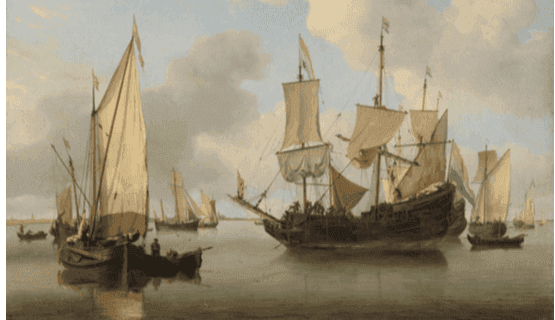
The history of the Dutch West India Company (WIC) started in 1621, when the Republic of the Seven United Netherlands granted a charter for a trade monopoly in the Dutch West Indies and gave jurisdiction over Dutch participation in the Atlantic slave trade, Brazil, the Caribbean, and North America.
The WIC's trade focused on acquiring goods like sugar, coffee, and cacao, which were obtained from its colonies and through privateering. It also involved the brutal transport of enslaved people from Africa to work on plantations, with its slave trade activities becoming a central part of its business by the 17th century.
Next to the WIC, the Dutch East India Company (VOC) was established in the 17th century as a powerful corporation that dominated trade between Asia and Europe, with a focus on spices such as nutmeg, mace, and cloves. Beyond spices, it also traded in textiles coming from India, becoming the world's first multinational corporation and the driving force behind Dutch commercial and colonial expansion.
What few people know is the close intertwining of the trades of humans and textiles. The WIC played a key role in the trade of textiles, using the same ships to facilitate the transportation of enslaved people between Africa, South America, and North America.
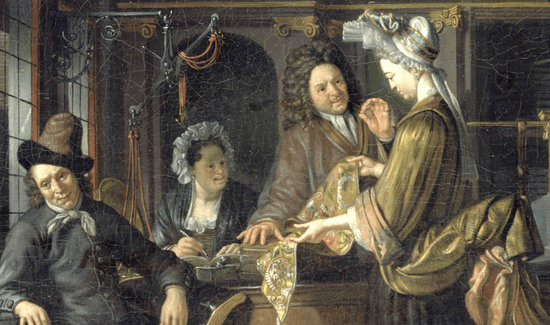
The textiles traded came in a variety of patterns and colours, each with a different purpose. Beyond their value as commodities in the service of global trade and diplomacy, however, textiles were also used to make clothing for the inhabitants of the colonies, including the enslaved people who were forcibly brought there. In New Netherland, textiles were essential for survival in the colder temperatures, and, as in other parts of the world, they were also crucial for New Amsterdam merchants seeking to conduct business with indigenous traders in the region.
A very interesting project that brought to light a lot of information about traded textiles by the WIC is the Dutch Textile Trade Project. The project aims to understand the circulation of globally sourced textiles on Dutch ships around the world in the seventeenth and eighteenth centuries by examining data drawn from trade records, alongside samples of textiles and visual culture depicting textiles in use. The centrepiece of this project, the Visual Textile Glossary, provides each historical textile term with a short definition and a longer essay contextualising that textile’s production and circulation. Each essay also includes visual and material examples, an interactive web application, and open-access data. Some examples of textiles traded and reported in the Visual Textile Glossary of the Dutch Textile Trade Project are platillas, lijnwaad and duffel.
The Platillas A fine bleached linen made in Silesia, but perhaps also Hamburg, Flanders, and Germany. Platillas were shipped by the schock (4 pieces) to West and West Central Africa. A sample used in the slave trade for enslaved people on the African coast. The picture portrays a swatchbook carried on the ship De Vrouwe Maria Geertruida, travelling from the Dutch Republic to the Guinea Coast of Africa, 1788. Nationaal Archief 1.05.01.02, no. 179.
Lijnwaad The term lijnwaad refers to a broad category of linen cloths produced in Europe, which varied in colour, pattern, and quality. These linens were popular imports to Northern European mercantile centres and major trading posts in West Africa and the Americas. They were predominantly carried on West India Company and Middelburg Commercial Company ships. Lijnwaad was frequently presented as a diplomatic gift to various indigenous groups in Dutch Brazil.
Chintz / Kalamkari Chintz is the most collected and most studied Indian textile from the early modern period. Its bold colors and patterns have long appealed to consumers across the world, and European textile factories later imitated it. The term ‘chintzy’ today can mean a busy (even tacky) pattern or a cheap (ungenerous) person. Chintz textile was made in a range of patterns, from geometric to figural, but is most often associated with florals and plants, like the image above, with red and pink stylized flowers and purple, green, and brown/black stems and leaves. It could be in a repeating pattern or a singular field, like the popular Tree of Life motif.
Duffel Duffel is a woollen cloth that was demanded by traders in the areas around New Amsterdam in exchange for the beaver pelts they hunted and processed. Indigenous traders valued duffel because it could be used as clothing during the day and a blanket at night. Traders preferred duffel in colours like blue and grey, and refused duffel of colour red because the bright colour was a hindrance to hunting.
The story of Dutch colonial trade is therefore not only a story of ships, routes, and commodities, but also one woven from cloth. Textiles were currency, tools of diplomacy, instruments of survival, and markers of power. They moved across oceans alongside enslaved people, carrying with them the weight of violence, extraction, and global inequality.
Understanding this history matters because textiles have never been neutral. From seventeenth-century linen and chintz to today’s cotton T-shirts, fabric reflects the systems that produce it. The threads that once connected Europe, Africa, Asia, and the Americas through colonial trade continue to echo in contemporary fashion supply chains.
To look closely at cloth is to look closely at history. And to acknowledge the past embedded in textiles is a necessary step toward imagining a fashion system that no longer relies on exploitation, erasure, and disposability.